
Published on: April 20, 2026
Most homeowners want to know the same thing before starting a project. How long will it take to finish the basement? You want to know how long your home will be under construction and when you can start using the space.
In most cases, basement finishing in Utah takes about 12 weeks after permits are approved. More complex layouts or custom features can push that closer to 14 weeks. The key is understanding what happens during that time and what can affect the schedule.
Most basement finishing projects take about 12 weeks after permits, with clear steps that keep everything moving forward.
Before construction begins, there is a planning and permit phase that is often overlooked when discussing the basement finishing timeline. This step is important because it sets the foundation for everything that follows.
During this phase, your layout is finalized, drawings are created, and permits are submitted to the city. Depending on the city and project complexity, this can take a few weeks. Some areas move quickly, while others take longer to review and approve plans.
Once permits are approved, the construction timeline becomes much more predictable. This is when the typical 12-week schedule begins.
The first stage of construction is framing. This is where the structure of your basement takes shape based on the approved layout.
Walls are built, rooms are defined, and any necessary backing for features like cabinets or mounted TVs is installed. At this stage, you can walk through the space and start to get a sense of how everything will feel.
Framing usually moves quickly, but it is a critical step because everything else builds off of it.
After framing, the next phase is rough-ins for plumbing, electrical, and HVAC systems. These are the systems behind the walls that make the space functional.
Plumbing lines are installed for bathrooms or wet bars. Electrical wiring is run for outlets, lighting, and switches. HVAC is extended to ensure the basement stays comfortable year-round.
This stage also includes inspections. Each system must be approved before moving forward, which helps ensure everything is safe and built to code.
Once inspections are passed, insulation and drywall are installed. This is where the basement starts to feel more like a finished space.
Insulation helps with temperature control and sound reduction. Drywall covers walls and ceilings, creating the clean, finished surfaces you expect in a basement.
After drywall is installed, it is taped, mudded, and sanded. This process takes time because it requires multiple passes to get a smooth finish.
With the walls complete, the focus shifts to finishing details. This includes doors, trim, cabinets, and other built-in features.
Paint is applied, and you start to see the design come together. At this stage, the space begins to look close to finished, even though several steps remain.
The duration of this phase can vary depending on the number of custom features included in the project.
Next comes flooring and fixture installation. Carpet, LVP, tile, or other flooring materials are installed throughout the space.
Bathroom fixtures, lighting, and other final components are also installed. These details bring the entire basement together and make it fully functional.
By the end of this stage, most of the visible work is complete.
The final step in the basement finishing timeline is completing small details and performing a final walkthrough.
Touch-ups are handled, any remaining items are completed, and the space is cleaned. You will walk through the basement with your contractor to review everything and make sure it meets expectations.
Once this is complete, your basement will be ready for use.
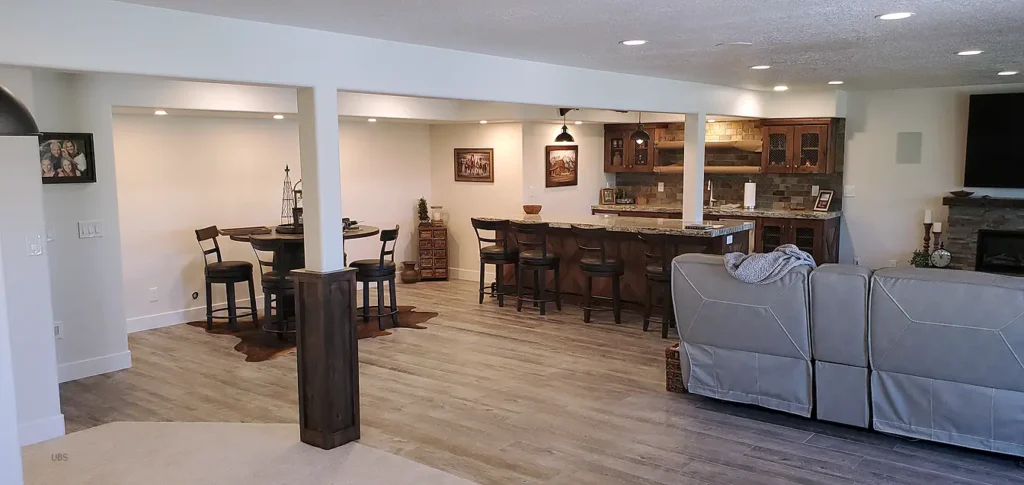
While most projects follow a similar schedule, a few factors can extend the timeline.
The biggest factor is the size of the basement. Larger spaces simply take more time to frame, wire, finish, and detail. Layout complexity also plays a role. A simple open layout will move faster than a basement with multiple bedrooms, a bathroom, and a wet bar.
Custom features are another common reason timelines extend. Built-in cabinets, home theaters, kitchens, and detailed finish work all add steps to the process. These are often worth it, but they do require more time.
Inspections can also impact progress. Each phase requires approval before moving forward, and scheduling depends on the city’s availability. Material delays, while less common, can also affect certain stages, such as flooring or fixtures.
A clear plan, realistic expectations, and an experienced contractor help keep these variables under control.
A well-organized process is one of the biggest factors in keeping your basement finishing timeline on track. When each step is planned and scheduled in advance, there are fewer surprises during construction.
You know what is happening, what comes next, and how long each phase should take. This makes the entire experience more predictable and easier to manage. For homeowners, that clarity is just as important as the final result.
Most basement finishing projects in Utah take about 12 weeks after permits, with more complex projects closer to 14 weeks. The timeline follows a clear sequence, from framing to final walkthrough.
Understanding the process helps you plan ahead and set realistic expectations. With the right contractor and a structured approach, your project can stay on schedule and deliver a finished space that adds real value to your home. Contact us to get a clear timeline and plan for finishing your basement.