
Published on: May 20, 2026
Choosing the right flooring is one of the biggest decisions in a basement finishing project. Flooring affects how the space looks, feels, and performs over time. In Utah basements, the best option usually depends on how the space will be used and the required level of durability.
Some flooring materials handle moisture and wear better than others. Some feel warmer and more comfortable, while others are easier to maintain long-term. Understanding the strengths and tradeoffs of each option helps you make a more confident decision before construction begins.
The best basement flooring balances durability, moisture resistance, comfort, and how the space will be used daily.
Basements have different conditions from the main level of a home. Concrete slabs, cooler temperatures, and the potential for moisture all affect how flooring performs over time.
Because of this, not every flooring material that works upstairs is ideal for a basement. Durability, moisture resistance, and long-term maintenance become more important when selecting basement flooring.
The goal is to choose a material that works well for both the space and its intended use.
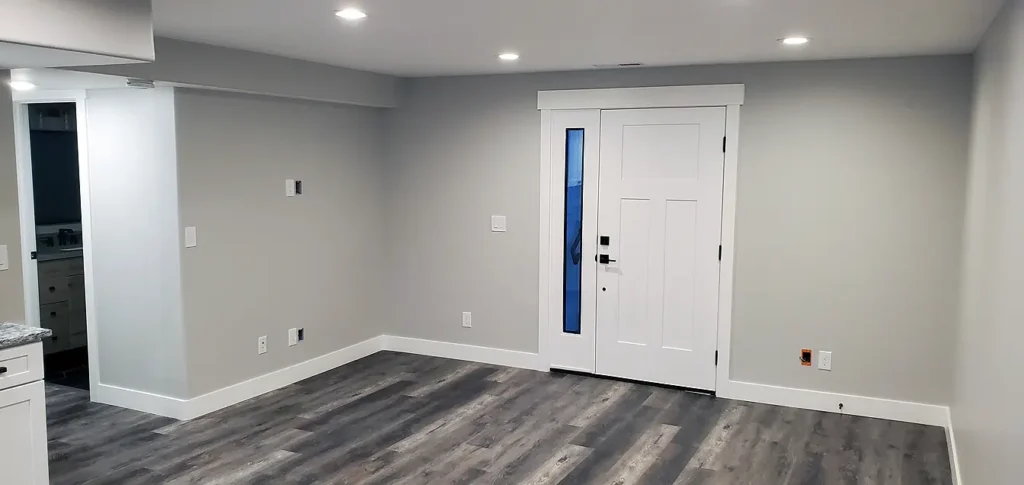
Luxury vinyl plank flooring, often called LVP, has become one of the most common basement flooring options in Utah. It is durable, moisture-resistant, and works well in a wide range of basement layouts.
LVP also handles temperature changes better than many traditional materials. It provides the look of wood flooring without the same level of maintenance or moisture sensitivity.
For many homeowners, it offers the best balance between appearance, durability, and practicality.
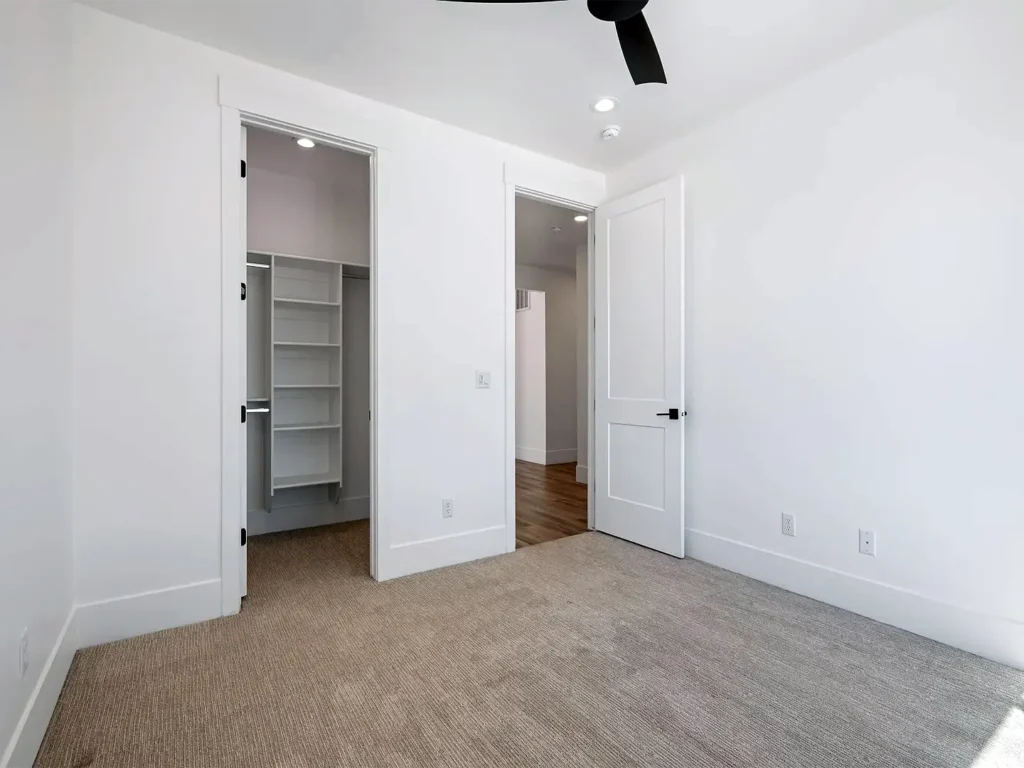
Carpet remains a popular option for basement bedrooms and living rooms because it adds warmth and comfort. In cooler basement spaces, carpet can make the area feel softer and more inviting.
It also helps reduce sound, which can improve the feel of larger living spaces or entertainment rooms.
However, carpet may not be the best option for every area. Spaces with higher moisture exposure or heavy traffic often benefit from more durable materials.
Tile is commonly used in basement bathrooms, laundry rooms, and other areas where water resistance is important. It is durable, easy to clean, and performs well in spaces exposed to moisture.
Tile also works well with heated flooring systems, which some homeowners choose for basement bathrooms.
While tile is extremely durable, it can feel colder underfoot than other flooring options. Because of this, it is usually used selectively rather than throughout the entire basement.
Different basement spaces often benefit from different flooring materials. Open living areas may prioritize durability and appearance, while bedrooms may focus more on comfort.
Using the same flooring throughout the basement can create a cleaner, more cohesive look. In other cases, mixing materials strategically helps each area function better.
The best approach depends on how the basement is designed and used.
Even in properly finished basements, moisture resistance is still important when selecting flooring. Some materials handle long-term basement conditions much better than others.
LVP and tile are generally more moisture-resistant than traditional hardwood flooring. Carpet can still work well when installed in the right areas and paired with proper basement finishing practices.
Choosing materials designed for basement environments helps reduce long-term issues.
Flooring should not only look good when the basement is finished. It also needs to hold up over time. Basements are often high-use spaces, especially in homes with larger families.
Durable flooring materials help reduce wear and simplify maintenance. Scratches, dents, and moisture exposure are all factors worth considering before making a decision.
Thinking long-term usually leads to better flooring choices.
Flooring plays a major role in how the basement feels visually. Color, texture, and material choice all affect the overall look of the space.
Lighter flooring can make basements feel larger and brighter, while darker tones create more contrast and warmth. Consistency between the flooring and the rest of the basement design helps the finished space feel more intentional.
Choosing flooring early in the planning process often makes the rest of the design decisions easier.
Even high-quality flooring can perform poorly if it is installed incorrectly. Basement flooring requires proper preparation, leveling, and installation methods to hold up over time.
Working with experienced professionals helps ensure the flooring performs the way it should and integrates properly with the rest of the basement finish.
A good installation protects both the appearance and the long-term durability of the floor.
The best flooring choice depends on the project’s goals. Some homeowners prioritize durability and easy maintenance, while others focus more on comfort or appearance.
In many cases, a combination of materials works best. LVP in the main living areas paired with carpet in bedrooms or tile in bathrooms creates a balanced approach.
Looking at how the space will actually be used usually leads to the best long-term decision.
The best basement flooring combines durability, comfort, moisture resistance, and design. Choosing the right material depends on how the basement will be used and which features matter most to your household.
Planning flooring choices early helps create a more cohesive and functional finished basement.
Explore our basement gallery to see flooring ideas and finished basement designs from projects across Northern Utah.